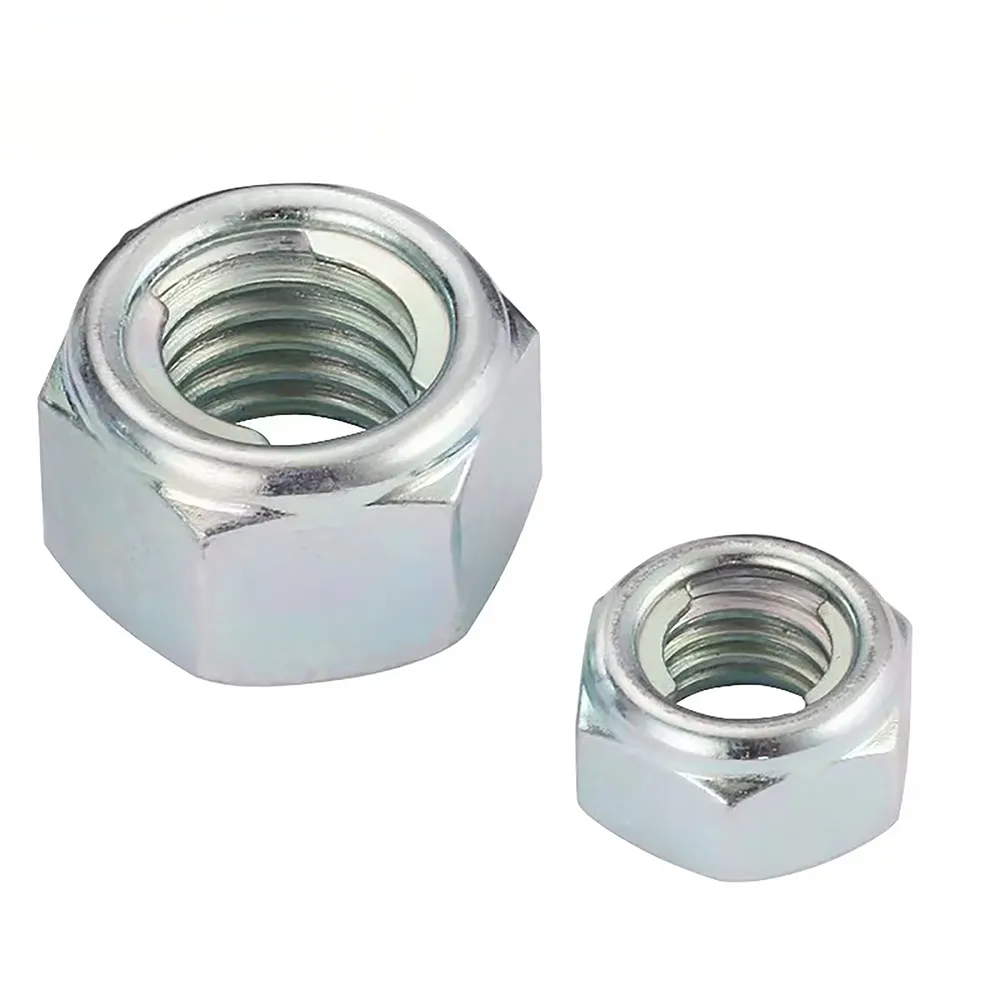
Top Quality Socket Head Cap Screw Manufacturers Guide
When securing mechanical components against rotation or axial displacement, the choice of fastening hardware often determines the overall stability of the assembly. Set screws, characterized by their headless design, serve as critical anchors in precision engineering by embedding tapered or grooved ends directly into the mating surface. For procurement managers in the automotive, agricultural, and construction sectors, sourcing these components requires a balance between material grade, corrosion resistance, and precise dimensional tolerances to avoid costly production downtime.
Whether you are fixing a pulley to a motor shaft or securing synchronizer rings in a high-performance transmission, the reliability of the fastener is paramount. By focusing on standardized industrial specifications and strict quality control, industrial buyers can eliminate "quality anxiety" and ensure that every component fits perfectly every time, reducing the need for frequent replacements and unplanned maintenance cycles.

Mechanical Logic of Headless Fastening and Rotational Locking
Set screws operate on a fundamental mechanical principle: creating a high-pressure point of contact between a shaft and a hub. Unlike standard bolts that clamp two parts together, these headless fasteners are driven into a tapped hole to exert axial pressure, effectively preventing the rotation of components such as gears, pulleys, and couplings. This mechanism is essential in mechanical transmissions where circumferential positioning must remain absolute under operational torque.
The effectiveness of this locking mechanism depends heavily on the point geometry and the material hardness. For instance, in high-torque environments, Grade 12.9 carbon steel is often preferred due to its high tensile strength (≥1220MPa), which prevents the screw from shearing or deformating under load. In contrast, for precision instruments like optical tubes, the focus is on preload and stability rather than raw strength, requiring tighter tolerances and specialized surface treatments to prevent vibration-induced loosening.
By replacing complex key connections with a simple set screw assembly, engineers can significantly simplify the assembly process and reduce the total part count of a machine. However, this simplicity requires rigorous adherence to torque specifications—such as 5-7 N·m for M6 screws—to ensure the fastener secures the part without damaging the shaft surface.

Material Selection for Diverse Environmental Challenges
Selecting the correct material is the first line of defense against fastener failure. The choice usually fluctuates between high-strength carbon steels and corrosion-resistant stainless steels, depending on the operating environment. Carbon steels in grades 4.8, 8.8, and 12.9 offer a spectrum of strength, with the latter being indispensable for heavy-duty industrial machinery where tensile stress is a primary concern.
In environments exposed to moisture or chemicals, stainless steel grades like A2-70 and A4-80 are the industry standard. A4-80, specifically, is engineered for seawater corrosion resistance, making it the ideal choice for marine hardware or agricultural machinery used in coastal regions. The trade-off is typically a lower tensile strength compared to alloy steels, but the gain in longevity and reduced maintenance costs justifies the selection.
Surface treatments further enhance these material properties. While Black Oxide provides a basic level of protection and a professional aesthetic, Zinc Plating (≥5μm) offers standard protection against oxidation. For extreme conditions, Dacromet coating is utilized, pushing salt spray resistance beyond 480 hours, which is critical for construction projects where fasteners are exposed to the elements for extended periods.
Critical Application Scenarios Across Global Industries
The versatility of set screws allows them to be integrated into a vast array of industrial applications. In the automotive sector, they are vital for fixing synchronizer rings in transmissions and ensuring the anti-rotation of steering column U-joints. In these scenarios, the ability to withstand constant vibration and thermal expansion is non-negotiable, often requiring the use of threadlockers to maintain the integrity of the connection.
Within the realm of agricultural machinery, these fasteners secure pulleys to motor shafts and maintain the axial retention of gears in reducers. Given that agricultural equipment often operates in dusty and humid conditions, the combination of high-grade steel and anti-corrosion coatings ensures that the machinery remains operational throughout the harvest season without fastener failure.
Precision instruments and office furniture also rely on this technology. In optical tubes, set screws lock focus rings with extreme precision, while in office chairs, they are used to lock gas springs, ensuring user safety and product durability. This wide range of use cases highlights the need for a supplier that can provide over 2000 standard specifications in stock to meet varied industry demands rapidly.
Technical Specification and Material Comparison Matrix
| Material Grade | Tensile Strength | Corrosion Resistance | Primary Application |
|---|---|---|---|
| Carbon Steel 12.9 | ≥1220MPa | Low (Requires Coating) | Heavy Machinery / Automotive |
| Stainless A2-70 | Medium | High | Food Processing / Precision Tools |
| Stainless A4-80 | Medium-High | Very High (Seawater) | Marine / Chemical Industry |
| Zinc Plated Steel | Variable | Medium (48h Salt Spray) | General Construction |
| Dacromet Coated | Variable | Extreme (>480h Salt Spray) | Outdoor Infrastructure |
Procurement Strategy for SMEs: Balancing Cost and Quality
For small and medium-sized enterprises (SMEs), the procurement of fasteners is often a struggle between avoiding "budget stress" and eliminating "quality anxiety." The most effective strategy is to partner with a factory-direct manufacturer that operates on economies of scale. By removing intermediaries, buyers can typically achieve 10%-15% cost savings, which directly impacts the ROI of the final product.
Quality assurance should be verified through certifications like ISO 9001 and a transparent inspection process. A critical metric for buyers is the tensile strength tolerance; a variance within ±5% ensures that the fasteners perform consistently across millions of units. When evaluating socket head cap screw manufacturers, SMEs should look for those who provide 100% inspection protocols rather than simple batch sampling, as a single defective screw can lead to a total assembly failure.
Furthermore, supply chain agility is a competitive advantage. In an era of just-in-time manufacturing, a supplier that maintains a vast inventory of standard specifications and offers 72-hour express shipping can help a trader or manufacturer reduce their supply chain cycles by up to 40%. This reduces the need for expensive on-site warehousing and improves cash flow for the buyer.
Future Trends in Industrial Fastening and Lean Manufacturing
The industrial fastening landscape is shifting toward "zero-defect" principles and environmental responsibility. Lean manufacturing is no longer just about cost reduction but about optimizing the entire lifecycle of the fastener. We are seeing an increased demand for eco-friendly coatings that replace traditional hexavalent chromium, aligning with global sustainability goals without sacrificing corrosion resistance.
Technological innovation is also focusing on anti-loosening mechanisms. While traditional threadlockers are effective, the industry is moving toward specialized thread geometries and innovative materials that can resist vibration more naturally. This is particularly important in the electric vehicle (EV) sector, where high-frequency vibrations from electric motors place new stresses on traditional fastening solutions.
For global buyers, the trend is toward "one-stop service" models. The ability to handle everything from material selection and customization to logistics tracking in a single partnership reduces communication barriers and administrative overhead. As the world becomes more connected, the value of a fastener partner lies in their ability to provide "hassle-free, timely, and affordable" solutions that support the growth of industrial SMEs worldwide.
Frequently Asked Questions About Industrial Set Screws
What is the main difference between Carbon Steel 12.9 and Stainless A4-80 set screws?
Carbon Steel 12.9 is designed for maximum strength with a tensile strength of ≥1220MPa, making it ideal for high-load mechanical parts. Stainless A4-80 focuses on chemical and seawater corrosion resistance, making it suitable for marine environments where strength is secondary to durability.
How do I prevent set screws from loosening due to vibration?
To prevent loosening, it is recommended to use a high-quality threadlocker (liquid adhesive) during assembly. Additionally, ensuring the correct torque (e.g., 5-7 N·m for M6) and selecting fine thread options (like M8×0.75) can enhance the anti-loosening properties of the connection.
Which surface treatment is best for heavy outdoor corrosion?
Dacromet coating is the superior choice for heavy corrosion resistance, as it can withstand salt spray tests for over 480 hours, significantly outperforming standard zinc plating which typically covers 48 hours.
Can set screws replace keyed shafts in all applications?
While set screws simplify assembly and are excellent for many applications, they are best for loads where the torque is moderate. For extremely high-torque applications where shaft damage must be absolutely avoided, a traditional keyway may still be necessary.
What quality certifications should I look for in a fastener supplier?
Look for ISO 9001 certification, which ensures a standardized quality management system. Additionally, ask for the supplier's defect rate (industry average is 1.2%, while high-end manufacturers aim for ≤0.3%) and their tensile strength tolerance levels.
What is the typical lead time for standard fastener specifications?
For suppliers with extensive stock (2000+ models), express shipping can be as fast as 72 hours. For customized orders, lead times vary based on the material and coating requirements.
Technical References and Industry Standards
- ISO Quality Management Systems Standards
- National Institute of Standards and Technology (NIST)
- ASME Fastener Standards and Specifications
- ASTM International Material Testing Standards
If you are seeking a reliable partner to optimize your supply chain with high-precision fasteners, Handan Boen Fastener Manufacturing Co., Ltd. provides the perfect blend of factory-direct pricing and ISO-certified quality. Contact us today to secure your production with "zero-defect" components.
Related Industrial Fastening Solutions