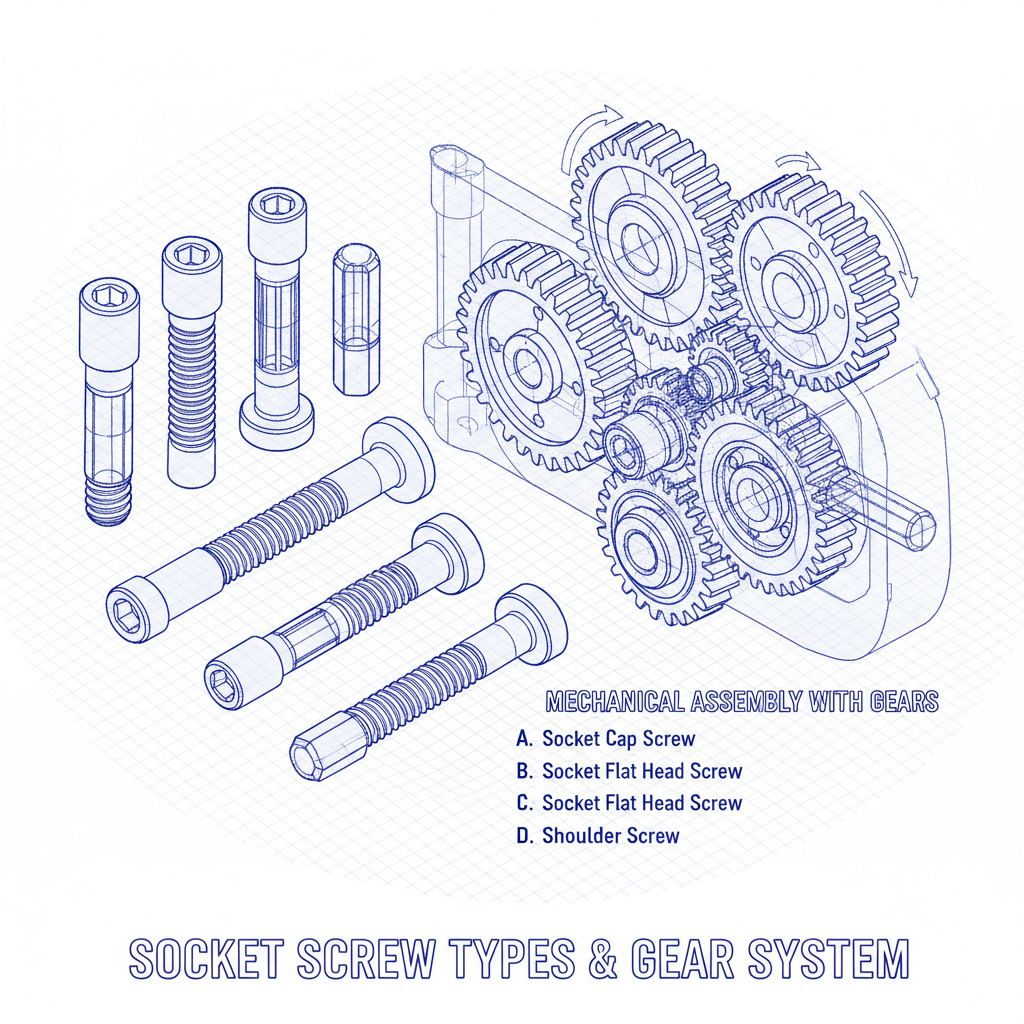
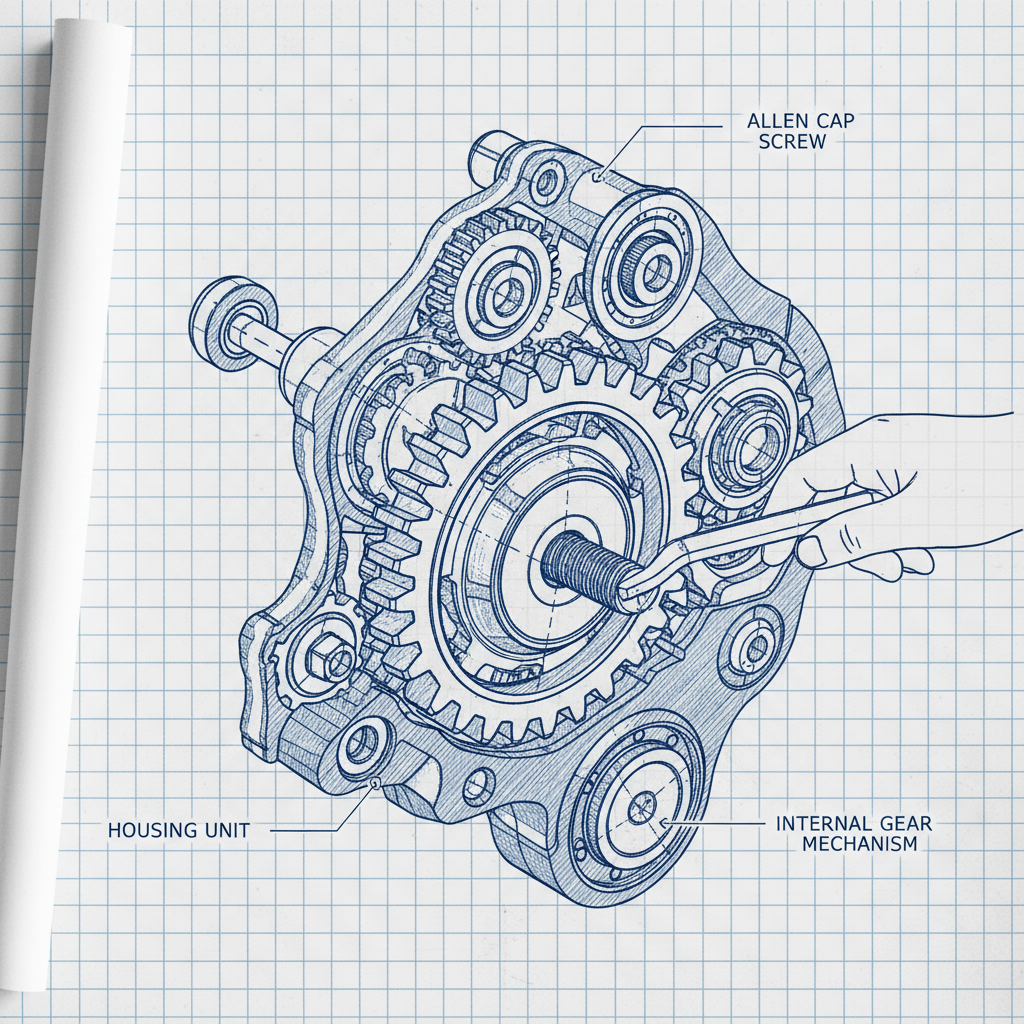
Selecting the right fasteners for high-stress mechanical assemblies often comes down to a single critical component: the socket head cap screw. These fasteners are designed specifically for applications where high tensile strength and a compact head profile are non-negotiable requirements.
In precision engineering, the gap between a successful assembly and a catastrophic failure often lies in the material grade and the precision of the drive. As industries move toward more compact and vibration-heavy designs—particularly in robotics and automotive sectors—the criteria for vetting socket head cap screw suppliers have shifted from mere pricing to strict adherence to ISO and DIN standards.
This analysis examines the technical specifications, material science, and procurement logic necessary to ensure these critical components perform under extreme industrial loads.

Engineering Fundamentals of Socket Head Designs

The primary engineering advantage of the socket head cap screw is its ability to deliver high torque in confined spaces. Unlike external-drive bolts, the internal hex socket allows for a smaller head diameter relative to the shank's strength, enabling engineers to maximize space within compact housings.
Standardization is the backbone of this design. Following DIN 912 or ISO 4762 ensures that fasteners are interchangeable across global supply chains, which is essential for maintenance in international robotics and automotive assembly lines.
Technical Analysis of Material Grades and Hardness
Material selection determines the fatigue limit of a fastener. For high-load environments, Alloy Steel (such as SCM435 or 40Cr) is the industry standard. These materials undergo an oil-quenching and tempering process to achieve a precise balance between hardness and ductility, preventing brittle failure while maintaining immense clamping force.
Class 12.9 is the highest common strength grade for these screws, offering a tensile strength of ≥1,220 MPa and a yield strength of ≥1,100 MPa. This makes them ideal for heavy-duty applications where the fastener must resist stretching or permanent deformation under extreme tension.
Hardness control is equally vital. Maintaining a range of 39-44 HRC (or HV 435-530) ensures that the socket drive does not strip during installation or removal, particularly when using high-torque pneumatic tools in an industrial setting.
The Critical Role of Vibration Resistance
In machinery like offshore wind turbine gearboxes or automotive transmission systems, constant vibration is the primary enemy of joint integrity. Socket head cap screws are often selected because their design allows for higher preloads, which increases the friction between mating surfaces and reduces the likelihood of self-loosening.
The value of a precision fastener is not found in its individual strength, but in its ability to maintain a consistent clamping force over millions of vibration cycles without losing torque.
To further enhance security, these fasteners are frequently paired with conical spring washers or specialized locking nuts. This combination ensures that the preload is maintained even as thermal expansion and contraction occur within the assembly.
Performance Metrics Across Industrial Sectors
Different industries prioritize different performance indices. In medical equipment construction, such as CT scanner frames, the priority is dimensional stability and zero-defect tolerances. In contrast, the automotive sector focuses on the weight-to-strength ratio and resistance to corrosive environmental factors.
When evaluating socket head cap screw suppliers, procurement managers often use a relative suitability index to balance cost against the required strength grade and delivery speed.
Figure 2. Suitability Index for High-Strength Fasteners by Industry
Strategic Application Scenarios
In a typical industrial setting, such as the assembly of an industrial robotic arm, the joints must withstand high dynamic loads and repeated acceleration. Here, the use of Class 12.9 socket head cap screws is essential for joint assembly to ensure that the arm maintains its precision over thousands of hours of operation.
Similarly, in precision die clamping plates for mold making, the fasteners must provide immense pressure without yielding. The choice of oil-quenched alloy steel ensures that the screws can be tightened to the exact torque required to seal a mold, preventing flash and ensuring part quality in plastic injection molding.
Future Trends in Fastening Technology
The industry is currently shifting toward lean manufacturing and "zero-defect" principles. This means that the tolerance for tensile strength variance is narrowing. Suppliers are now expected to provide documented proof of consistency, with strength variance held within ±5%, as seen in ISO 9001-certified processes.
Another emerging trend is the integration of specialized coatings for anti-corrosion without sacrificing the tight tolerances of the socket head. While traditional galvanizing can sometimes interfere with the fit, new thin-film coatings are allowing these screws to be used in more aggressive environments, such as offshore wind installations.
Furthermore, the demand for customizable thread pitches—particularly fine threads for high-precision medical equipment—is increasing, forcing manufacturers to move beyond standard metric coarse threads to meet niche engineering requirements.
Supplier Evaluation and Selection Framework
When vetting potential partners, the focus should be on the intersection of quality control and logistics. A supplier's ability to maintain a vast standard inventory (e.g., 2000+ specifications) directly impacts a manufacturer's procurement cycle and production uptime.
Beyond the product, the "export expertise" of a supplier is a hidden but critical value. Understanding international logistics, compliance, and professional export documentation prevents costly customs delays and ensures that the supply chain remains fluid for global SMEs.
Handan Boen Fastener Manufacturing Co., Ltd. serves as a practical example of this model, focusing on standardized, high-value industrial fasteners with a strong emphasis on a low defect rate (≤0.3%) and factory-direct pricing to reduce budget stress for mid-sized buyers.
| Evaluation Factor | Standard Requirement | High-Precision Requirement | Impact on Assembly |
|---|---|---|---|
| Material Grade | Class 8.8 / 10.9 | Class 12.9 Alloy Steel | Tensile Strength / Fatigue Life |
| Tolerances | Commercial Grade | ISO 4762 / DIN 912 | Interchangeability / Fit |
| Hardness Range | General Purpose | 39-44 HRC (Controlled) | Drive Integrity / Stripping |
| Quality Audit | Self-Certification | ISO 9001 / 100% Inspection | Defect Rate / Safety |
| Lead Time | Standard Production | In-Stock / 72-Hour Ship | Production Downtime |
| Documentation | Basic Invoice | Certified Export Papers | Customs / Compliance |
Questions & Answers
Class 12.9 alloy steel is preferred because it offers the highest strength-to-weight ratio among standard industrial fasteners. With a tensile strength of ≥1,220 MPa, it can handle immense loads and higher torque without permanent deformation. The oil-quenching and tempering process ensures the material is hard enough to resist wear but tempered enough to avoid the brittleness associated with lower-quality high-carbon steels.
Preventing stripping requires two things: matching the tool precisely to the ISO 10664 drive standard and ensuring the fastener's hardness is within the 39-44 HRC range. Using a poorly fitting Allen key or a fastener with inconsistent hardness leads to rounded edges. Always use high-quality CR-V tools and verify that the supplier provides hardness-controlled products per EN ISO 898-1.
Yes, but material choice and coating are critical. While alloy steel provides the strength needed for wind turbine gearboxes, it is susceptible to corrosion. To use them offshore, they must be paired with specialized anti-corrosion coatings or galvanized treatments. It is recommended to evaluate the specific salt-spray resistance of the coating against the operational environment's severity.
In most practical industrial applications, DIN 912 and ISO 4762 are considered equivalent. They both define the dimensions and technical requirements for hexagon socket head cap screws. However, ISO 4762 is the more globally recognized standard for international trade, whereas DIN 912 is the traditional German standard. Most professional suppliers ensure their products meet both specifications for maximum compatibility.
The most effective way is to move toward factory-direct sourcing. By eliminating intermediaries, companies can often reduce costs by 10%-15%. Additionally, partnering with a supplier that maintains a large standard inventory reduces the cost of emergency shipping and minimizes production delays. Focusing on suppliers with ISO 9001 certification ensures that the lower price doesn't result in a higher defect rate.
It depends on the application. Coarse threads are standard and generally easier to assemble and less prone to cross-threading. Fine threads, however, provide a higher clamping force and better vibration resistance because they have a shallower helix angle. Fine threads are typically used in precision medical equipment or aerospace components where adjustment precision is more important than assembly speed.
Final Thoughts
The integrity of any high-performance mechanical system depends on the smallest components. Socket head cap screws, when specified correctly in terms of material grade and dimensional standard, provide the necessary security for everything from robotic joints to wind turbine gearboxes.
For procurement teams, the goal should be a balance of technical precision and supply chain reliability. By focusing on certified quality control and factory-direct sourcing, industrial SMEs can ensure that their assemblies remain safe, durable, and cost-effective.