Selecting a reliable socket head screw manufacturer is a critical decision for engineering and procurement leaders in the metal tools and cutting tool manufacturing sectors. These high-strength fasteners are essential for applications requiring high torque and compact installations, where a cylindrical head with an internal hexagonal drive provides the necessary leverage and security for heavy-duty industrial machinery.
The primary challenge for many SMEs is balancing the trade-off between cost-efficiency and precision. Inconsistent thread fit, suboptimal material grades, and long lead times from distributors often lead to production stoppages and increased total cost of ownership (TCO), making direct factory sourcing a strategic necessity for maintaining lean operations.
This guide examines the technical specifications, procurement risks, and supplier evaluation criteria necessary to secure a stable supply chain. By understanding the nuances of material grades and manufacturing tolerances, buyers can optimize their fastening solutions for maximum durability and reduced maintenance overhead.

Technical Core of Socket Head Screws

Socket head screws, often referred to as cap screws, are designed for high-strength applications where space is limited. The internal hex drive allows for the application of higher torque compared to external hex bolts, and because the head is smaller, it can be countersunk or placed in tight recesses. A professional socket head screw manufacturer ensures that the internal drive is precision-machined to prevent stripping during high-torque assembly.
From a manufacturing perspective, the quality of the thread rolling process determines the fatigue strength of the fastener. Cold-rolled threads provide better structural integrity than cut threads, as they maintain the grain flow of the metal, which is essential for the heavy-duty environments found in the metal products and cutting tool industries.
Critical Material Grades and Tensile Strength
Material selection is the foundation of fastener performance. For most industrial applications, alloy steel grades such as 12.9 are preferred due to their high tensile strength and hardness. However, in environments prone to corrosion, stainless steel options like A2-70 or A4-80 are utilized. The choice of grade directly impacts the clamping force and the risk of hydrogen embrittlement after plating.
Handan Boen Fastener Manufacturing Co., Ltd. focuses on ISO 9001-certified production to ensure that tensile strength tolerances remain within ±5%. This level of precision is vital for SMEs who cannot afford the risk of fastener failure in critical joints, as it ensures that every batch meets the specified engineering requirements without variance.
Industrial Application Scenarios
Socket head screws are indispensable in the automotive, agricultural, and construction machinery sectors. In automotive chassis and engine mounts, they provide the necessary vibration resistance and high clamping force. In agricultural machinery, the ability to use high-grade alloy steel prevents loosening under the extreme stresses of field operations.
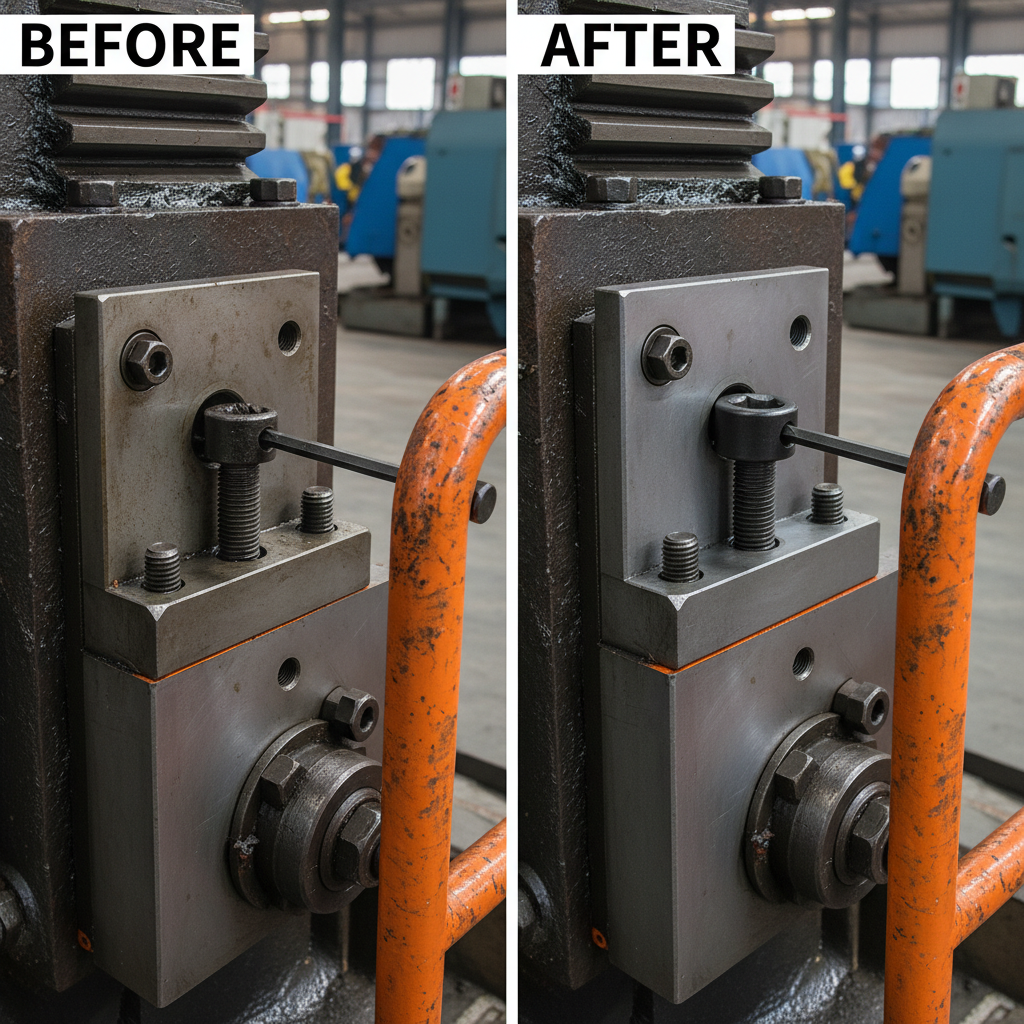
Additionally, in the cutting tool manufacturing industry, these screws are used to secure tool holders and inserts. The precision of the Hexagon Socket Head Cap Screws ensures that the tool remains perfectly aligned during high-speed machining, where even a micron of movement could result in part failure or tool breakage.
Evaluating Sourcing Efficiency Metrics
When evaluating a socket head screw manufacturer, buyers should look beyond the unit price and analyze a conceptual efficiency index. This index considers lead time, defect rates, and consistency. For instance, shifting from a distributor to a direct factory model can significantly reduce the procurement cycle and eliminate the hidden costs associated with quality inconsistencies.
The chart above illustrates a relative conceptual improvement in supply chain performance when moving from traditional intermediaries to a direct factory sourcing model. The reduction in lead time and the decrease in defect rates directly contribute to a lower total cost of ownership.
Supplier Qualification Framework
A robust supplier qualification framework prevents the "cheap bolt trap," where low initial costs lead to high failure rates. Buyers should prioritize manufacturers who provide full traceability, including heat numbers and mill certificates for every batch. This documentation is the only way to verify that the material grade matches the order specification.
Technical audits should focus on the manufacturer's inspection process. A quality-driven facility will employ dimensional inspection using thread gauges, hardness testing, and salt spray tests for coatings like Zinc or Dacromet. This ensures that the fasteners not only fit but also withstand the environmental conditions of the end-use application.
Common Procurement Risks and Mitigations
The most common risk in fastener procurement is thread mismatch, which can cause immediate line stoppages. This is often caused by a lack of standardization between the screw and the mating nut or tapped hole. To mitigate this, buyers should request samples with a full dimensional report before committing to bulk orders.
Another risk is the hidden reject rate. Low-cost manufacturers often have reject rates as high as 7%, which forces the buyer to over-order or face shortages. By partnering with a manufacturer that maintains a defect rate of ≤0.3%, companies can optimize their inventory levels and reduce the time spent on incoming quality control.
Direct Sourcing vs. Distributor Model
For SMEs in the metal tools industry, the choice between a local distributor and a direct manufacturer involves a trade-off between immediate availability and long-term cost stability. While distributors offer fast delivery for small quantities, they add a significant margin and often lack the ability to provide custom OEM specifications.
| Evaluation Metric | Local Distributor | Direct Manufacturer | Impact on SME |
|---|---|---|---|
| Unit Cost | High (Margin Added) | Low (Factory Direct) | Direct P&L Impact |
| Lead Time (Bulk) | Medium/Long | Short (Direct Ship) | Production Scheduling |
| Customization | Limited | Full OEM/ODM | Engineering Flexibility |
| Quality Traceability | Secondary Source | Primary (Mill Certs) | Risk Mitigation |
| Inventory Risk | Low (Small Batches) | Medium (MOQ Based) | Cash Flow Management |
| Communication | Sales Focused | Technical Focused | Solution Accuracy |
Ultimately, the direct sourcing model is more sustainable for companies with predictable production volumes, as it provides a 10%-15% cost advantage and eliminates the communication gap between the engineer and the production line.
Frequently Asked Questions
The most critical factor is quality consistency, verified through ISO 9001 certification and the provision of mill certificates. Ensuring that tensile strength and dimensional tolerances are consistent across batches prevents assembly failures and reduces the need for costly incoming inspections.
Stripping is usually caused by poor drive tolerances or using incorrect tools. Ensure your manufacturer uses precision machining for the socket. Additionally, always use high-quality CR-V or alloy steel hex keys that match the screw's dimensions exactly to ensure full contact surface area.
Grade 12.9 screws have significantly higher tensile strength and hardness than Grade 8.8, making them suitable for high-stress industrial applications. However, Grade 12.9 is more susceptible to hydrogen embrittlement if not plated correctly, whereas Grade 8.8 is more ductile.
Yes, this is a primary advantage of working with a direct manufacturer. OEM/ODM services allow for custom specifications regarding head diameter, under-head radius, and non-standard thread lengths, provided the minimum order quantity (MOQ) is met.
For high-corrosion environments, Hot Dip Galvanized (HDG) or Dacromet coatings are recommended. Dacromet provides a thinner, more uniform layer that is less likely to interfere with thread fit while offering superior salt spray resistance compared to standard zinc plating.
The most effective way to reduce costs is through consolidated shipments. By combining different fastener types—such as socket head screws, flange bolts, and washers—into a single mixed container, you can significantly reduce ocean freight costs per unit.
Conclusion
Securing a high-performance supply of socket head screws requires a shift from price-based procurement to a value-based engineering approach. By focusing on material traceability, precision tolerances, and a direct-to-factory sourcing model, manufacturers in the metal tools and machinery sectors can eliminate the hidden costs of quality failure and supply chain volatility.
For organizations seeking to optimize their fastener specifications or reduce procurement overhead, detailed technical data and direct factory quotes can be reviewed at www.boenfasteners.com to ensure your hardware meets the rigorous demands of industrial safety and performance.