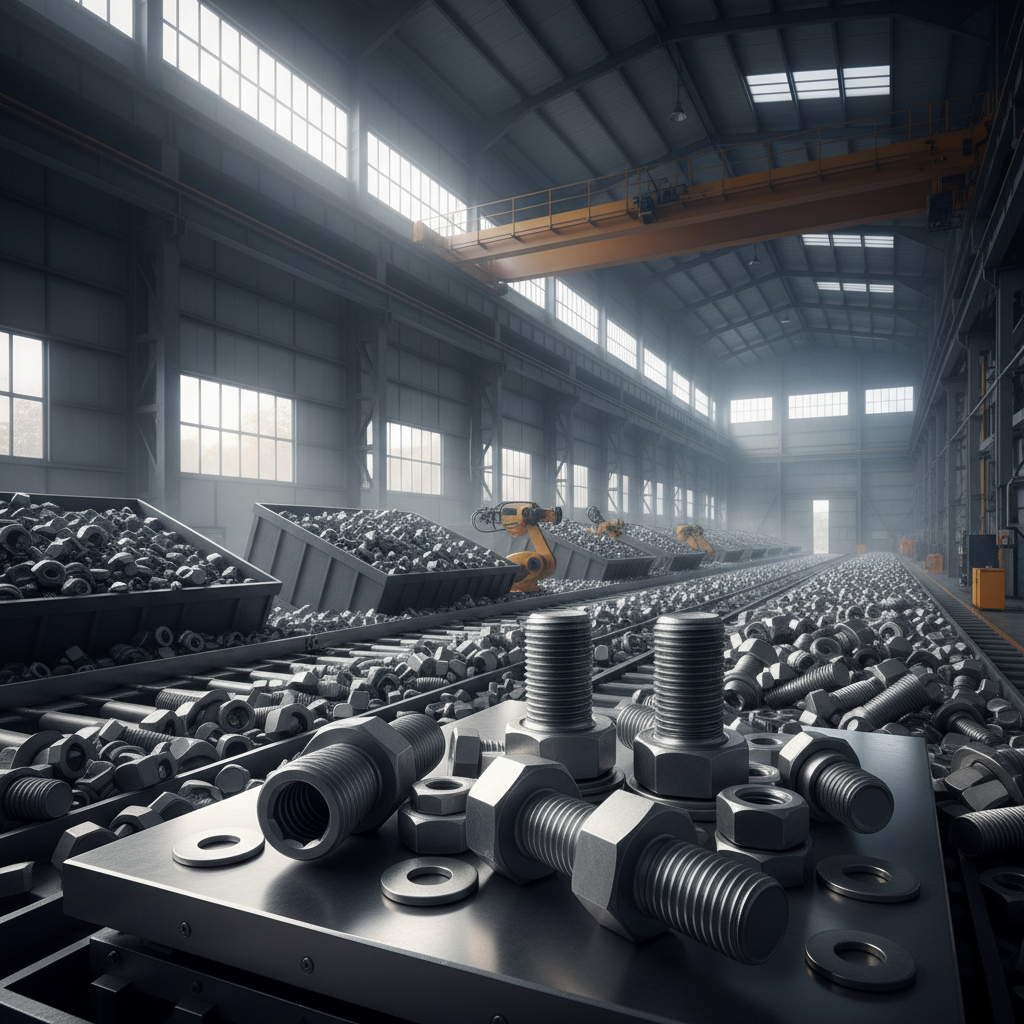
Procurement managers in heavy machinery and automotive sectors often struggle with the trade-off between fastener cost and joint integrity. When sourcing from socket cap screw manufacturers, the primary challenge isn't just finding a supplier, but identifying a partner who can guarantee dimensional consistency across high-volume batches to prevent assembly line stoppages.
A single failure in a high-tensile socket head cap screw can lead to catastrophic structural collapse in agricultural implements or construction scaffolding. This risk is compounded when buyers rely on distributors who lack direct transparency into the heat treatment and material chemistry of the factory floor.
This guide analyzes the critical evaluation metrics for selecting industrial fastener partners, focusing on how factory-direct sourcing from specialized manufacturers can reduce lead times and eliminate the "quality roulette" associated with mid-tier traders.

The Critical Role of Precision in Socket Head Fastening

Socket cap screws are engineered for applications where space is limited but torque requirements are extreme. Unlike external hex bolts, the internal hex drive allows for higher torque transmission and a cleaner finish, which is essential in precision machinery and automotive engine components.
However, the internal drive creates a vulnerability: the socket. If the manufacturer fails to maintain tight tolerances on the hex drive size, tool slippage (rounding) occurs, rendering the fastener impossible to remove without destructive methods. This is why the choice of manufacturer must be based on Cpk (Process Capability Index) values rather than just a "certified" label.
For SMEs in the metal tools and machinery sector, transitioning from a distributor model to a direct manufacturer relationship often reveals hidden costs—such as inconsistent hardness across a single lot—that were previously masked by distributor packaging.
Technical Benchmarks for High-Strength Socket Cap Screws
High-performance fastening requires strict adherence to international standards such as ASTM F835, SAE J429 Grade 8, and ISO 898-1. The core of a quality socket cap screw lies in the alloy steel chemistry and the precision of the heat treatment process, which determines the tensile strength and yield point.
Material selection typically ranges from Alloy Steel 10.9 and 12.9 for heavy-duty industrial use to 304 and 316 stainless steel for corrosive environments. A Grade 12.9 fastener can provide tensile strength up to 180,000 psi, but this requires a rigid quench-and-temper cycle to avoid internal stresses that lead to hydrogen embrittlement.
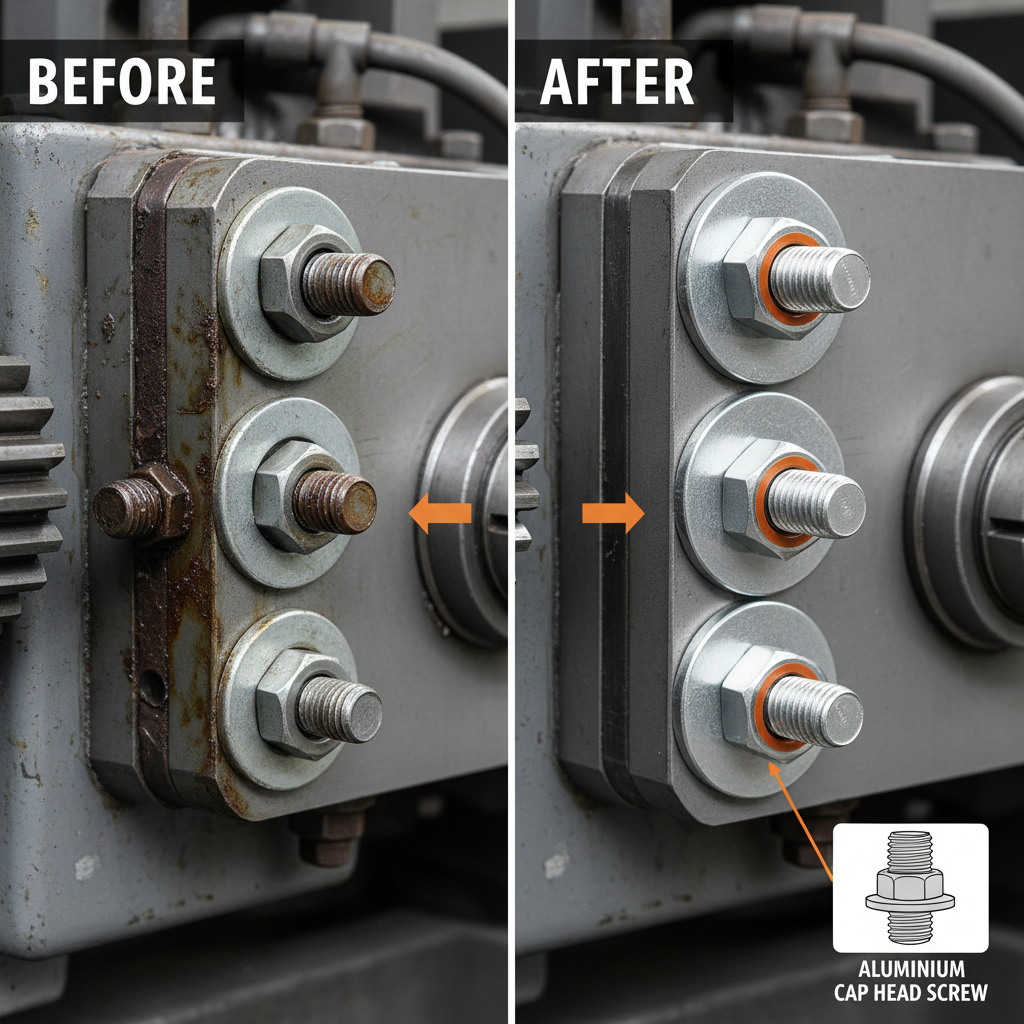
Beyond the metal, the coating defines the lifespan. While zinc plating is standard, specialized environments require Dacromet® or Geomet® to provide salt spray resistance exceeding 1,000 hours, ensuring the fastener does not seize in the hole over years of service.
Industrial Application Scenarios and Stress Requirements
In agricultural machinery, socket cap screws are frequently used in implement attachment points where they face constant shear stress and high-vibration cycles. In these scenarios, the ability of the fastener to maintain clamp load is the primary safety metric.
Within the construction equipment sector, such as steel scaffolding or crane joints, the demand shifts toward Grade 12.9 fasteners that exceed standard specifications. The objective is to reduce the total number of fasteners needed by increasing the load-bearing capacity of each individual screw, thereby reducing overall assembly weight.
Automotive OEM applications demand the highest level of traceability. Every batch must be accompanied by mill certificates that prove the chemical composition of the steel, as any deviation in carbon or manganese content can result in brittle failure during high-torque installation.
Analyzing Manufacturing Quality and Process Stability
Evaluating a manufacturer requires looking beyond the final product and examining the process stability. A high Cpk value (≥ 1.67) indicates that the production process is centered and capable of producing parts within tolerance consistently, reducing the defect rate to below 0.1%.
When comparing factory-direct production to traditional distributor sourcing, the most significant improvements are seen in lead time and cost-to-quality ratio. Direct control over the production cycle allows for agile adjustments to custom lengths or specialized coatings without the communication lag of a middleman.
socket cap screw manufacturers Performance Metrics
The data suggests that direct manufacturing reduces the "supply chain friction" by cutting lead times by nearly 70% and lowering costs by eliminating distributor markups, while simultaneously improving the consistency of hardness testing.
Strategic Procurement for Global Supply Chain Resilience
Effective procurement in the fastener industry is no longer about finding the lowest price per piece, but about calculating the Total Cost of Ownership (TCO). This includes the cost of failures, the cost of inventory holding, and the cost of delayed production lines.
To mitigate risk, buyers should implement a "sample-to-audit" workflow. This involves requesting a sample kit for independent laboratory testing of tensile strength and salt spray resistance before committing to a bulk PO. A manufacturer that provides full mill certificates and inspection reports proactively is a signal of operational maturity.
Furthermore, integrating inventory-sharing systems with the manufacturer can reduce procurement cycles. By maintaining a baseline of standard specifications in stock at the factory, buyers can move from a 12-week lead time to a 20-day delivery window.
Emerging Trends in High-Performance Fastener Metallurgy
The industry is moving toward "smarter" materials and more sustainable coatings. There is an increasing shift away from traditional hexavalent chromium coatings toward environmentally friendly alternatives that offer equivalent or superior corrosion protection, driven by stricter EU and North American regulations.
Advancements in cold-forming technology are allowing manufacturers to produce fasteners with tighter grain structures, which inherently improves fatigue resistance. This is particularly critical for components used in electric vehicles (EVs), where weight reduction must be balanced with extreme vibration resistance.
We are also seeing a rise in the demand for hybrid fastener solutions, combining the high strength of alloy steel with advanced ceramic coatings to reduce friction during installation and prevent galling in stainless steel applications.
Supplier Selection Framework for Industrial Buyers
Choosing the right partner requires a weighted evaluation of technical capability, quality assurance, and logistics reliability. The following framework helps procurement teams categorize potential manufacturers based on their specific project needs.
Depending on whether the priority is extreme cost-saving for a low-stress application or zero-defect reliability for a critical joint, the selection criteria must shift accordingly.
| Selection Priority | Recommended Material | Critical Quality Metric | Risk Factor |
|---|---|---|---|
| Extreme Load Bearing | Alloy Steel 12.9 | Cpk ≥ 1.67 / Hardness | Hydrogen Embrittlement |
| Marine / Corrosive | SS 316 / Dacromet | Salt Spray 1000h+ | Surface Pitting |
| High Volume / Low Cost | Carbon Steel 8.8 | Dimensional Tolerance | Batch Inconsistency |
| Precision Assembly | Alloy Steel 10.9 | 6g Thread Tolerance | Socket Rounding |
| Rapid Prototyping | Mixed Stainless | Lead Time (Days) | Material Mismatch |
| Critical Safety Joints | Certified Grade 8 | Mill Certificate Trace | Counterfeit Grading |
Ultimately, the ideal manufacturer is one that balances these technical requirements with a transparent communication channel, ensuring that any deviation in material or process is flagged before the shipment leaves the port.
Frequently Asked Questions
Conclusion
Selecting from the vast array of socket cap screw manufacturers requires a shift from "price-first" to "risk-first" procurement. By prioritizing process stability (Cpk), material traceability, and direct factory access, industrial buyers can significantly reduce both their unit costs and their operational risks.
For organizations looking to optimize their fastener supply chain and eliminate middleman markups, reviewing the technical specifications and production capabilities available through www.boenfasteners.com can provide a clear path toward more resilient and cost-effective sourcing.