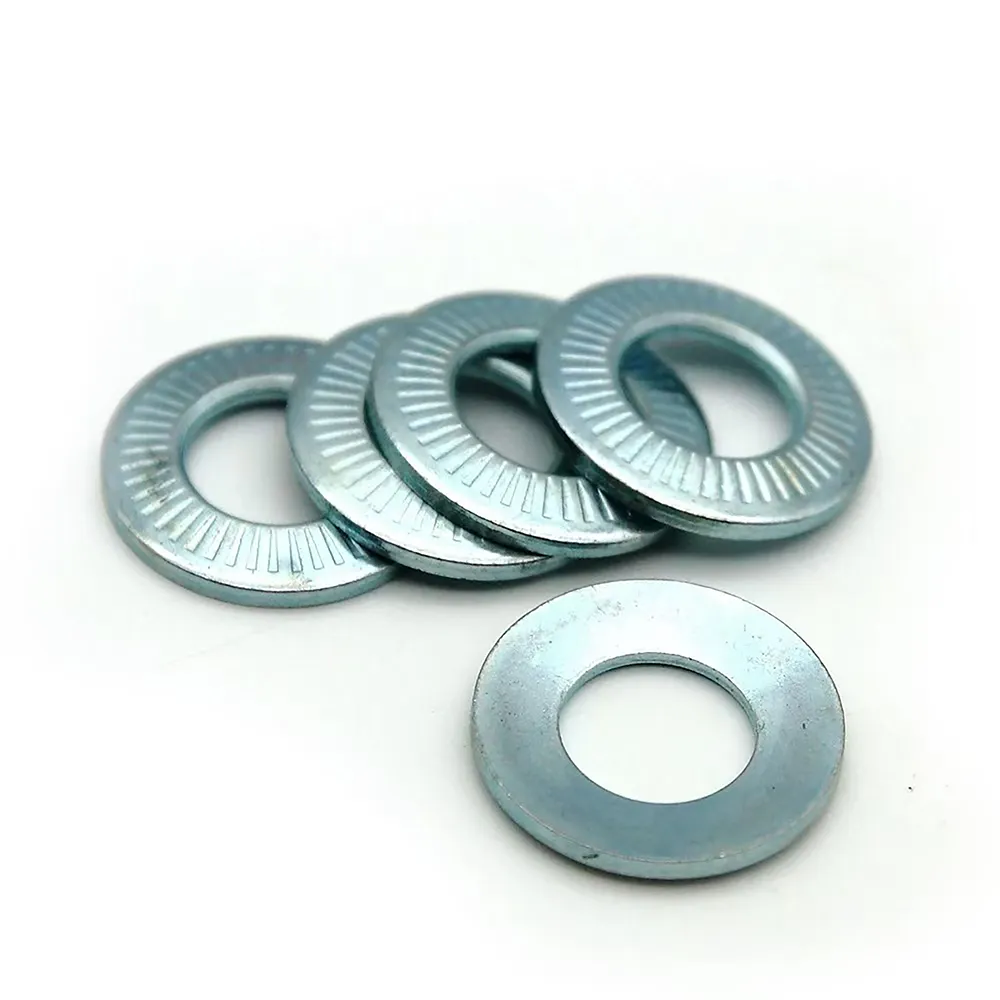
Choosing All Metal Lock Nut: Application Fit and Specification Checks
THE BUYER'S GUIDE / SELECTION
Choosing All Metal Lock Nut: Application Fit and Specification Checks
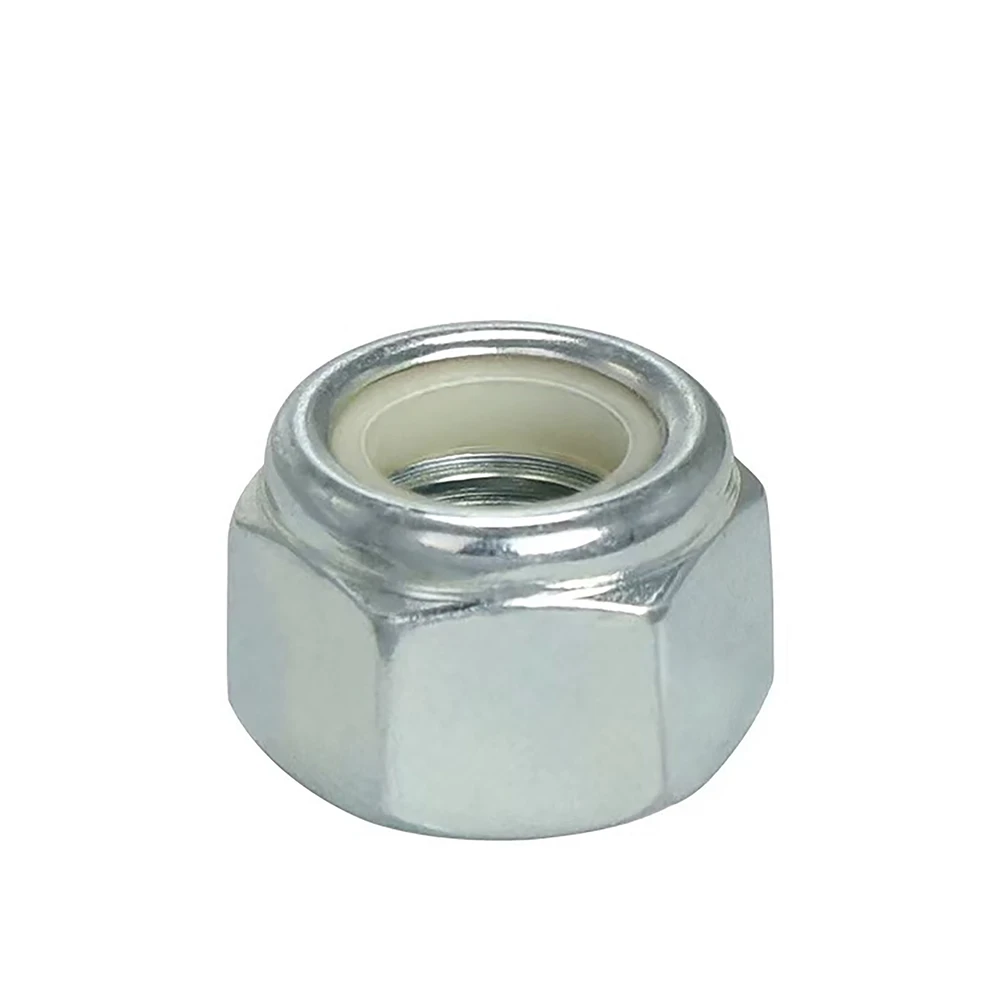
An all metal lock nut achieves vibration resistance purely through metal-to-metal locking — deformed threads or an integrated locking feature — rather than a plastic or nylon insert. This guide walks procurement teams through the key selection criteria: application environment, temperature range, reusability, material and coating requirements, and strength grade. Use these benchmarks to confirm whether an all metal lock nut is the right choice for your assembly before placing an order.

Operating temperature: All metal lock nuts withstand temperatures exceeding 300 °C, making them suitable where nylon inserts would melt or degrade.
Vibration and shock resistance: Deformed threads or integrated metal locking features generate prevailing torque that resists loosening under extreme vibration and mechanical shock.
Environmental durability: All metal construction is compatible with protective platings (zinc-nickel, cadmium, etc.) and resists corrosion, UV radiation, chemicals, and fuels.
Reusability: All metal lock nuts can be reused multiple times without significant loss of locking performance, unlike nylon-insert nuts.
Sustained load and creep resistance: Metal locking elements maintain bolt tension under long-term static or cyclic load, avoiding the cold flow seen in polymer inserts.
Strength grade match: Available in full grades (e.g., Grade 8, 10, 12) with no polymer weak point, so structural integrity matches the bolt grade.
What Is an All Metal Lock Nut?
An all metal lock nut is a prevailing-torque fastener whose locking action comes entirely from its metal construction — typically a deformed thread profile or an integrated conical or flanged locking element. Unlike nylon-insert nuts (e.g., nyloc), there is no polymer component to melt, creep, or degrade, making this type of lock nut suitable for demanding operating environments.
Handan Boen Fastener Manufacturing Co., Ltd. manufactures all metal lock nuts for industrial, automotive, aerospace, and infrastructure buyers across the US, Europe, the Middle East, and Southeast Asia.
Key Selection Criteria
Before specifying an all metal lock nut, evaluate each criterion below against your assembly requirements.
1. Operating Temperature
The most common reason buyers switch from a nylon-insert nut to an all metal lock nut is temperature. A nylon insert begins to soften and lose clamping torque at elevated heat. An all metal lock nut withstands temperatures exceeding 300 °C, which makes it suitable for engine compartments, exhaust systems, furnaces, and chemical processing plants where nylon inserts would fail.
Checklist question: Does your assembly reach or exceed temperatures at which a polymer insert would degrade?
2. Vibration and Shock Resistance
All metal lock nuts generate prevailing torque through their metal locking geometry. The deformed thread or locking element creates a controlled interference fit that resists loosening under extreme vibration and mechanical shock. This characteristic makes them standard in aerospace engine mounts, landing gear, automotive drivetrain assemblies, suspension systems, and rail bogie frames.
Checklist question: Is your joint subject to continuous vibration, cyclic loading, or impact?
3. Environmental Exposure
All metal construction is compatible with protective surface treatments — zinc-nickel, cadmium, and other platings — and resists corrosion, UV radiation, fuels, and chemicals. For saltwater-exposed structures such as marine and offshore deck machinery, verify that the chosen plating or base material is appropriate for the specific corrosive medium.
Checklist question: Will the fastener be exposed to corrosive media, UV, or harsh chemicals?
4. Reusability Requirement
Unlike nylon-insert nuts, which lose locking performance after one or a few removal cycles, all metal lock nuts can be reused multiple times without significant loss of prevailing torque. For assemblies that require periodic maintenance, disassembly, and reassembly, this extends the service life of the fastener and reduces replacement costs.
Checklist question: Will this joint be opened and re-torqued during routine maintenance cycles?
5. Sustained Load and Creep Resistance
Polymer inserts can experience cold flow — gradual deformation under sustained compressive load — which reduces clamp force over time. All metal locking elements maintain bolt tension under sustained load, a property critical for structural joints, power transmission towers, bridge connections, and seismic bracing.
Checklist question: Is the joint under long-term static or cyclic load where clamp-force relaxation would be unsafe?
6. Strength Grade Match
All metal lock nuts are available in full strength grades (e.g., Grade 8, Grade 10, Grade 12). Because there is no polymer insert to act as a weak point, the nut's structural integrity matches the strength grade of the bolt. Confirm that the specified grade is consistent with your bolt grade and joint design load.
Checklist question: Does the nut grade match the bolt grade and the joint's calculated load requirement?
Application Fit by Industry
The table below maps common industry applications to the criteria that make an all metal lock nut appropriate:
| Industry | Primary Driver |
|---|---|
| Aerospace & Aviation (engine mounts, landing gear, flight controls) | High temperature + vibration resistance |
| Automotive & Motorsport (engine, drivetrain, suspension) | Temperature + vibration + reusability |
| Rail & Heavy Machinery (bogie frames, structural joints) | Vibration + sustained load resistance |
| Energy & Industrial (turbines, pumps, oil/gas drilling) | Temperature + chemical exposure |
| Military & Defense (armored vehicles, ruggedized electronics) | Vibration + environmental durability |
| Marine & Offshore (deck machinery, propulsion systems) | Corrosion resistance + reusability |
| High-Temperature Environments (exhaust, furnaces, chemical plants) | Temperature > 300 °C |
| Critical Infrastructure (bridges, power towers, seismic bracing) | Sustained load + creep resistance |
When an All Metal Lock Nut May Not Be the Right Choice
An all metal lock nut is not always the optimal fastener. Consider alternatives when:
- Low-temperature, non-vibratory joints — A nylon-insert nut is lighter, lower-cost, and adequate for moderate temperatures and low vibration.
- Single-use, torque-sensitive assemblies — Where prevailing torque must be precisely controlled to a very low value, a different locking method (thread-locking adhesive or a free-running nut with a lock washer) may be preferred.
- Non-metallic substrate — Locking geometry that bites into the mating surface is inappropriate for composite or plastic flanges.
If none of these exclusions apply, an all metal lock nut is likely appropriate.
Specification Checks Before Ordering
Use this checklist to finalise your purchase specification:
- Thread size and pitch — Confirm diameter, pitch, and thread standard (metric or unified).
- Strength/property class — Match to bolt grade (e.g., Grade 8 / Property Class 10).
- Locking type — All-metal cone, distorted thread, flanged, or aerotight-style; confirm the prevailing torque range meets your joint specification.
- Surface treatment — Select plating (zinc-nickel, cadmium, etc.) based on the corrosive environment and any RoHS or regulatory constraints.
- Dimensional standard — Verify hex width, height, and bearing face to standard (DIN, ISO, ASME) for fit within the joint.
- Quantity and packaging — State unit quantity, bulk or boxed packaging, and any pre-shipment inspection requirements.
Why Source from Handan Boen Fastener Manufacturing Co., Ltd.?
Handan Boen Fastener Manufacturing Co., Ltd. supports international buyers with:
- Detailed product specifications on request — Customisable spec sheets for informed purchasing decisions.
- Instant quote response — Submit inquiries for prompt pricing and solution proposals.
- Certified export documentation and timely shipment — Professionally prepared export papers to simplify customs clearance.
- Custom packaging with pre-shipment visual verification — Branded or secure packaging with photo confirmation before dispatch.
- Reliable after-sales support — Swift resolution for technical issues and product inquiries.
- 20+ years of global export expertise — Proven experience in international logistics and compliance.
For full specifications or a quote on all metal lock nuts, contact the Handan Boen Fastener Manufacturing Co., Ltd. team directly.
THE PEOPLE

About the author
THE COMPANY
Handan Boen Fastener Manufacturing Co., Ltd.
Handan Boen Fastener Manufacturing Co., Ltd. (Est. 2010) specializes in producing standardized industrial fasteners, including bolts, nuts, washers, and other essential components. We provide cost-effective for small and medium-sized buyers in industries such as automotive parts, agricultural machinery, and construction. Why Choose Us? No Quality Anxiety: ISO 9001-certified quality control + 100% inspection process, ensuring tensile strength tolerance within ±5%.…
About Us ↗Visit company website ↗YOUR NEXT STEP
Bring your brief. Start a useful conversation.
Use case, specification, quantity and delivery window: make the next conversation specific.
Who We Are: The Right Fastener Partner for Global SMEs
Handan Boen Fastener Manufacturing Co., Ltd. (Est. 2010) specializes in producing standardized industrial fasteners, including bolts, nuts, washers, and other essential components. We provide cost-effective for small and medium-sized buyers in industries such as automotive parts, agricultural machinery, and construction.