Comprehensive Guide to Flat Head Socket Head Cap Screw Dimensions and Specifications
Understanding Flat Head Socket Head Cap Screw Dimensions
When selecting fasteners for assembly, precision is paramount. Choosing the correct flat head socket head cap screws relies heavily on understanding their dimensional specifications. This article will comprehensively explore the various dimensions associated with these screws, ensuring you can make informed decisions for your projects. Accurate knowledge of these dimensions is crucial for ensuring proper fit, load bearing capacity, and overall assembly integrity. We'll cover everything from head height to thread length, providing a detailed guide for engineers, designers, and procurement professionals.
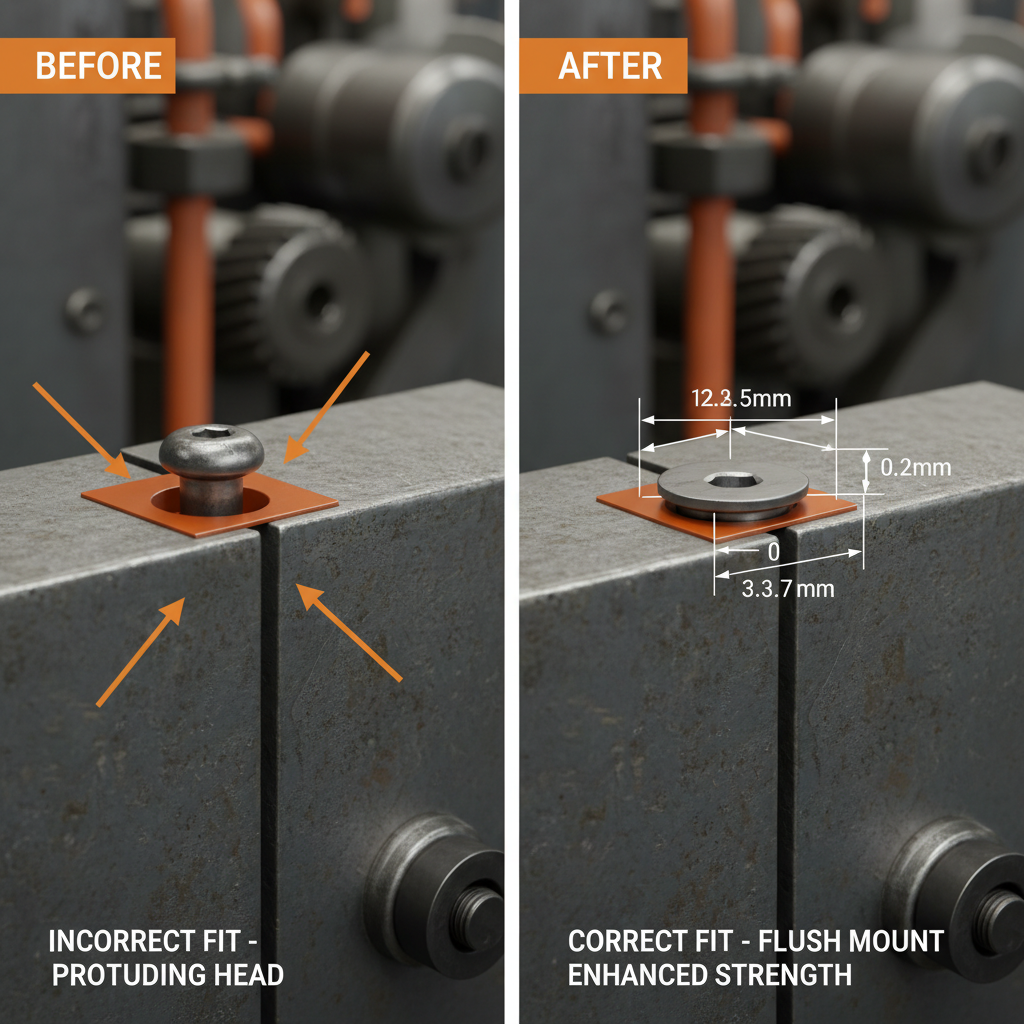
Key Dimensions of Flat Head Socket Head Cap Screws
Flat head socket head cap screws, commonly used for applications requiring a flush or low-profile finish, possess several critical dimensions. These include the diameter (D), thread pitch (P), length (L), head diameter (DK), head height (K), and the socket drive size (DS). Understanding how these dimensions interact is crucial for selecting the right screw for a given application. The diameter refers to the major diameter of the screw's threads. The thread pitch defines the distance between adjacent threads. The length is measured from under the head to the tip of the screw. Head dimensions, including diameter and height, determine the aesthetic and functional fit of the fastener. The socket drive size dictates the appropriate Allen wrench needed for installation and removal.
Key Highlights: Accurate dimensional control ensures proper seating, prevents material distortion, and maximizes the structural integrity of the assembled components.
A Detailed Look at Flat Head Socket Head Cap Screw Dimensions
Let's delve deeper into each dimension. The head diameter (DK) is crucial for ensuring the screw fits flush within a countersunk hole. The head height (K) impacts the overall profile and clearance. The length (L) must be carefully calculated based on the thickness of the materials being joined, as well as any washers or other components used. The thread length determines how much of the screw engages with the threaded hole. Selecting the correct thread length is important for achieving adequate holding power. Finally, the socket drive size (DS) must be compatible with the Allen wrench used for installation. Using the wrong size can lead to stripping of the socket, making the screw difficult or impossible to remove.
Critical Dimensions to Consider:
• Diameter (D): Determines the screw's strength and compatibility with threaded holes.
• Thread Pitch (P): Affects the speed of assembly and the clamping force.
• Length (L): Dictated by the materials being joined and the desired engagement.
• Head Diameter (DK): Ensures a flush fit within countersunk holes.
Common Standards and Dimension Tables
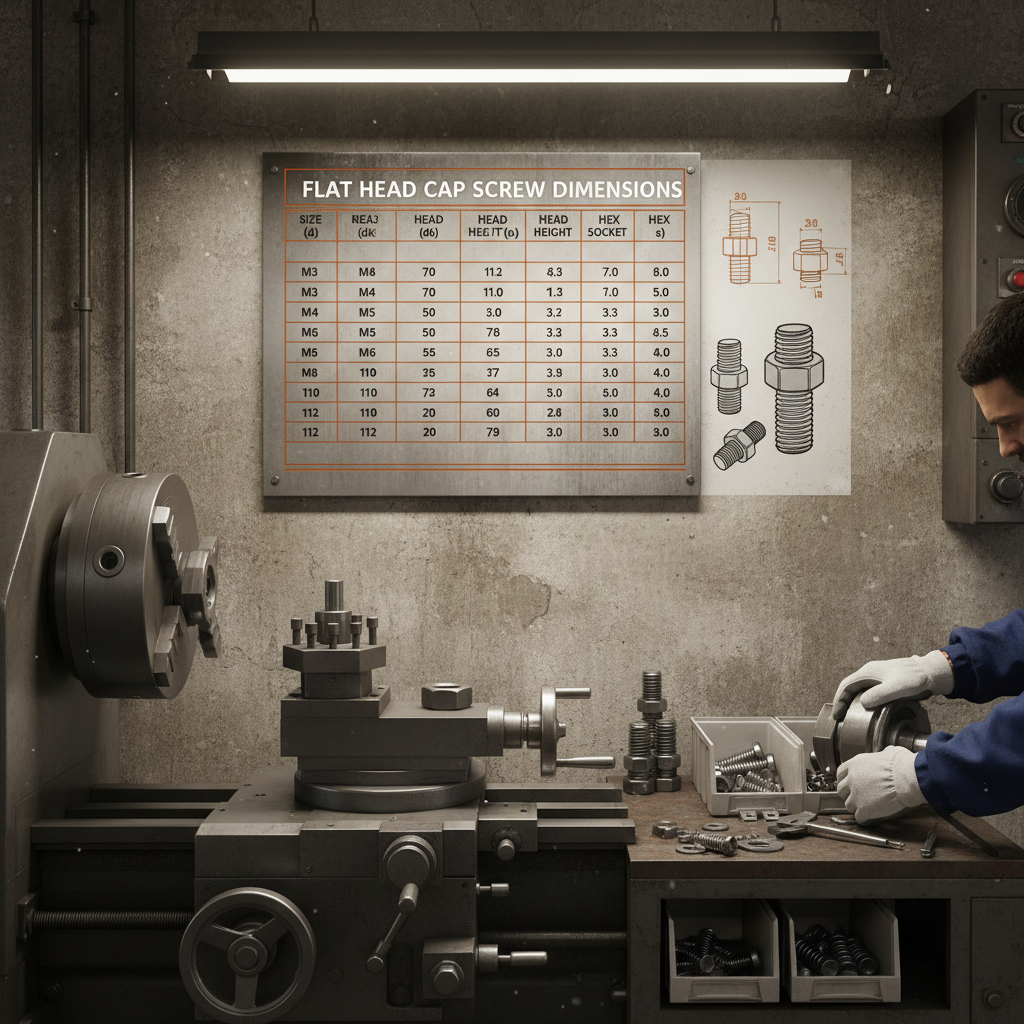
Flat head socket head cap screws are manufactured to various standards, including ISO 7380 and DIN 912. These standards define specific dimensional tolerances and material properties. Adhering to these standards ensures interchangeability and consistent performance. Below is a sample table outlining common dimensions for metric M3 screws, based on ISO 7380:
Material Considerations and Dimensional Impact
The material of the screw also influences its dimensional characteristics. Stainless steel, for example, may exhibit slight variations in dimensions compared to carbon steel due to differences in thermal expansion. Furthermore, the manufacturing process can introduce minor dimensional tolerances. It is essential to consider these factors when designing critical assemblies. Fastenboen offers a wide selection of flat head socket head cap screws in various materials and finishes, ensuring optimal performance for your specific application.
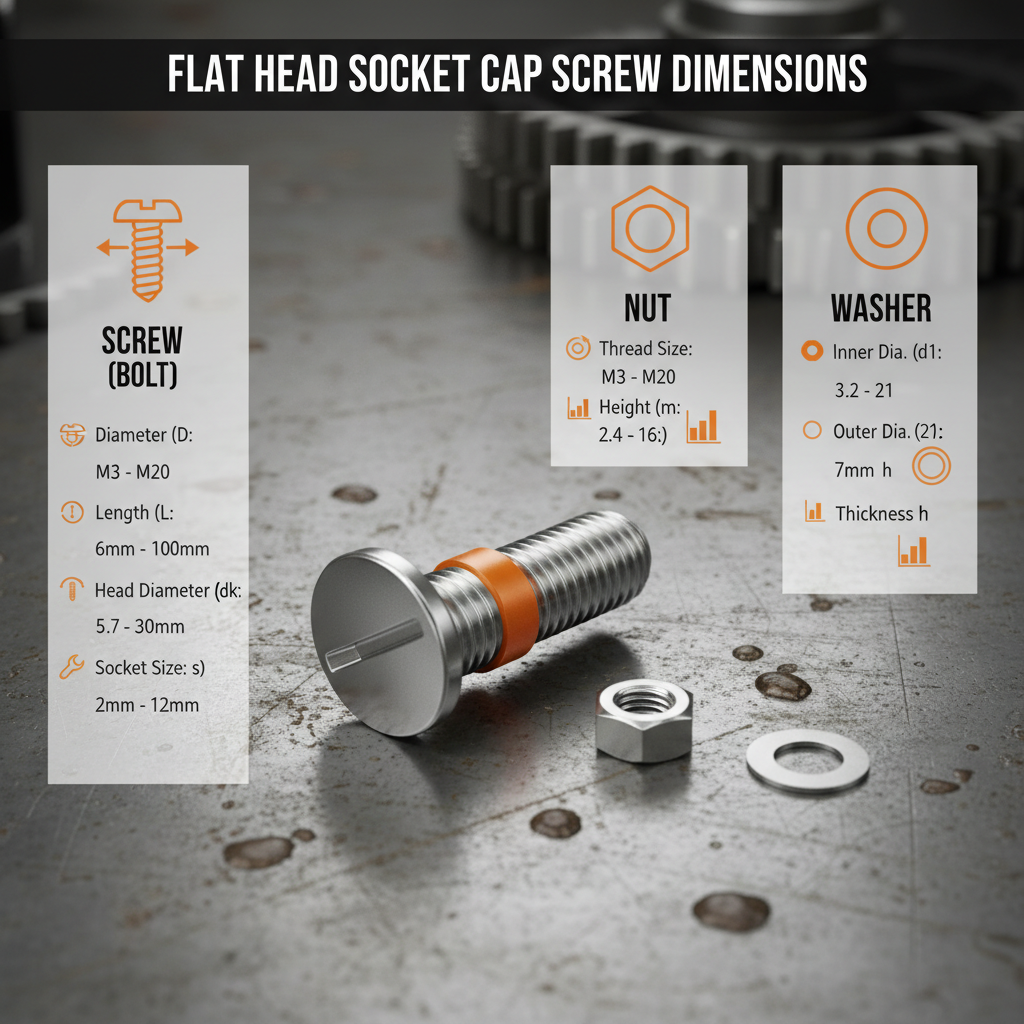
Technical Specifications and Standards Compliance
Flat head socket head cap screws are commonly manufactured according to ISO 7380, DIN 912, and ANSI/ASME B18.3 standards. These standards dictate the acceptable tolerances for each dimension, ensuring interchangeability and consistent performance. Material grades typically include stainless steel (A2, A4), carbon steel, and alloy steel. Understanding these standards is crucial for ensuring compatibility and meeting safety requirements. A detailed understanding of these specifications will allow for accurate selection of the proper screw for any application.
Conclusion: Precision in Fastener Selection
Choosing the right flat head socket head cap screw requires a thorough understanding of its dimensional specifications. By considering the key dimensions, adhering to relevant standards, and accounting for material properties, you can ensure optimal performance and reliability in your assemblies. Don't compromise on quality – choose fasteners from a trusted supplier like Fastenboen.
Frequently Asked Questions (FAQs)
What does "countersunk" mean in relation to flat head screws?
"Countersunk" refers to the conical shape of the hole that the flat head screw sits within. This allows the screw head to sit flush with the surface, creating a smooth and aesthetically pleasing finish. The angle of the countersink is typically 90 degrees, although other angles are also used. Properly countersinking a hole is essential for ensuring that the screw head sits flush and doesn't protrude, which can create a hazard or interfere with other components.
How do I determine the correct screw length?
Determining the correct screw length involves several factors. First, measure the total thickness of the materials being joined. Then, account for the height of the screw head. Finally, determine the desired amount of thread engagement. A general rule of thumb is to have at least half of the screw's length engaged with the threaded hole. It's always best to err on the side of slightly longer, as a screw that's too short won't provide adequate holding power.
What is the difference between metric and imperial screws?
Metric and imperial screws use different units of measurement. Metric screws use millimeters (mm), while imperial screws use inches (in). The thread pitch is also defined differently – metric screws use a pitch value, while imperial screws use threads per inch (TPI). Metric and imperial screws are not interchangeable. Using the wrong type of screw can damage the threads and compromise the integrity of the assembly.
Where can I find more detailed dimension tables for different screw sizes?
Detailed dimension tables for various screw sizes and standards can be found on the Fastenboen website, as well as in engineering handbooks and industry standards documents. These resources provide precise specifications and tolerances for accurate fastener selection.
Who We Are: The Right Fastener Partner for Global SMEs
Handan Boen Fastener Manufacturing Co., Ltd. (Est. 2010) specializes in producing standardized industrial fasteners, including bolts, nuts, washers, and other essential components. We provide cost-effective for small and medium-sized buyers in industries such as automotive parts, agricultural machinery, and construction.